
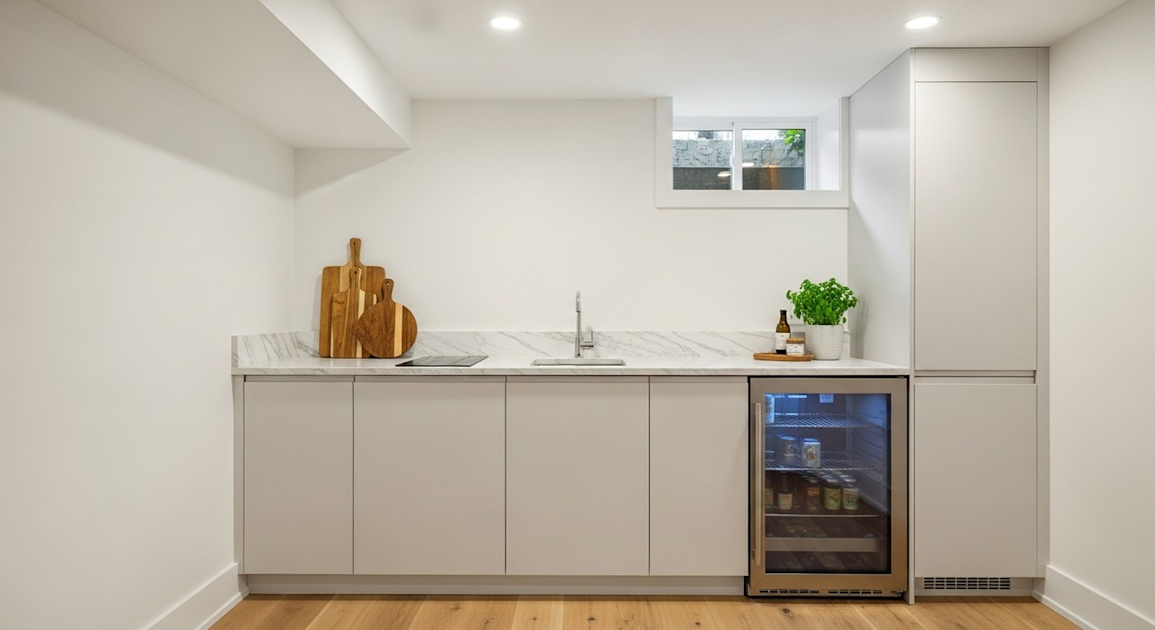


A basement kitchenette is more than just an additional cooking space; it's an opportunity to add value to your home, enhance convenience, and showcase your unique style. Whether you're dreaming of a cozy drink station, a sophisticated cooking corner, or a convenient guest amenity, this comprehensive guide will walk you through all the essentials of designing and crafting the perfect basement kitchenette.
Why Consider a Basement Kitchenette?
Before we dive into the nitty-gritty of designing, let's explore why a basement kitchenette might be the next best thing for your home.
Enhance Home Value and Appeal
Incorporating a basement kitchenette can significantly increase the future resale value of your property. Homebuyers are often drawn to houses with additional amenities, especially those that can serve multiple purposes such as entertaining guests or creating independent living spaces.
Convenience and Comfort
Turning your basement into a functional area means lessening the load on your main kitchen. Whether you're hosting large gatherings or preferring a simpler snack prep zone, a kitchenette in the basement can help manage the crowd and cater to different meal prep needs.
Key Considerations for Designing a Basement Kitchenette
Building a basement kitchenette is an exciting project, but it needs thoughtful planning and execution to cater to your specifics. Here's what to consider:
Space and Layout
Start by assessing the available space. The layout of your kitchenette should complement the existing layout. Consider these popular styles:
- Galley: Ideal for narrow basements, a galley layout features a parallel setup of cabinets and appliances.
- L-Shape: Maximizes corner space, perfect for when you want to integrate the kitchenette into a larger living space.
- U-Shape: Larger basement spaces can accommodate this layout, offering more storage and surface area.
Plumbing and Electrical Needs
A functional kitchenette often requires adequate plumbing and electrical setup. Work with professionals to install water lines for a sink and dishwashing equipment. Ensure outlets are conveniently placed for appliances like microwaves, fridges, and cooktops.
Ventilation and Lighting
Proper ventilation is crucial to prevent moisture build-up and odors. Consider installing a small exhaust system.
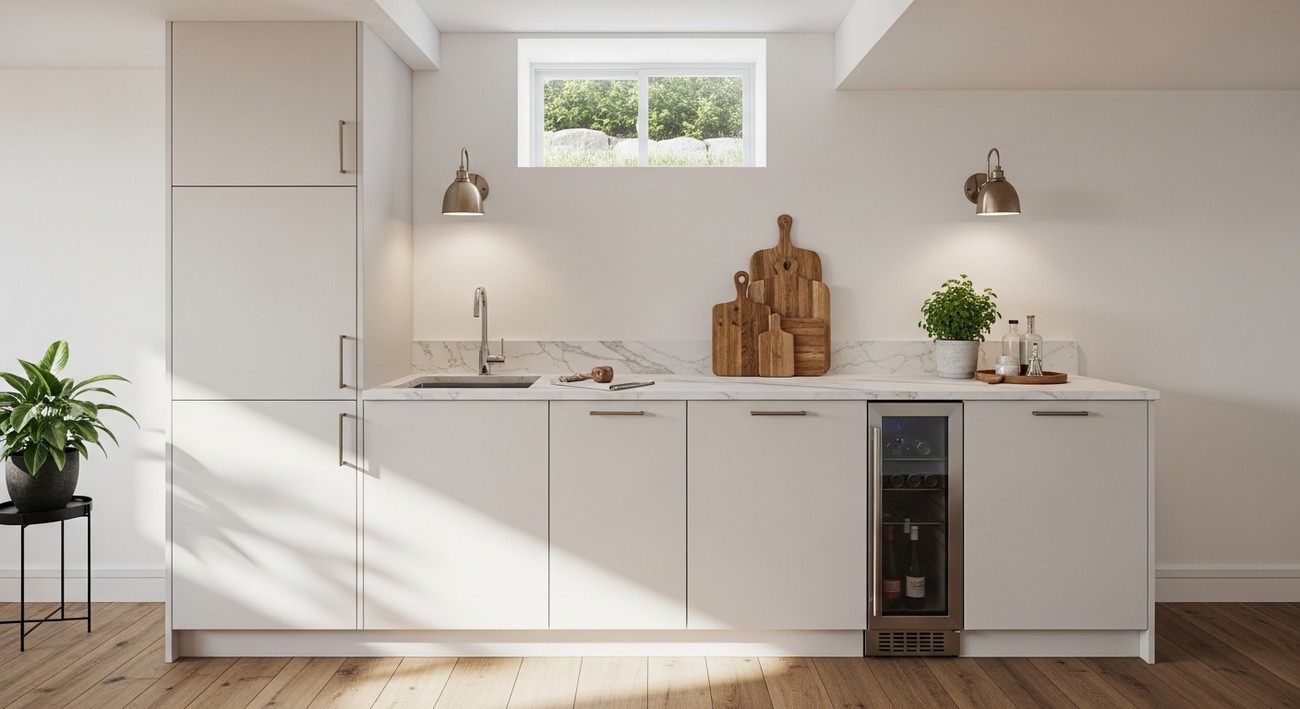
For lighting, basement kitchenettes can greatly benefit from layered lighting:
- Ambient lighting to illuminate the entire space.
- Task lighting under cabinets or above worktops.
- Accent lighting for added style and atmosphere.
Selecting Appliances and Fixtures
When it comes to appliances and fixtures, think of both necessity and style.
Size Matters
Basements can have constraints, so opt for compact and combo appliances:
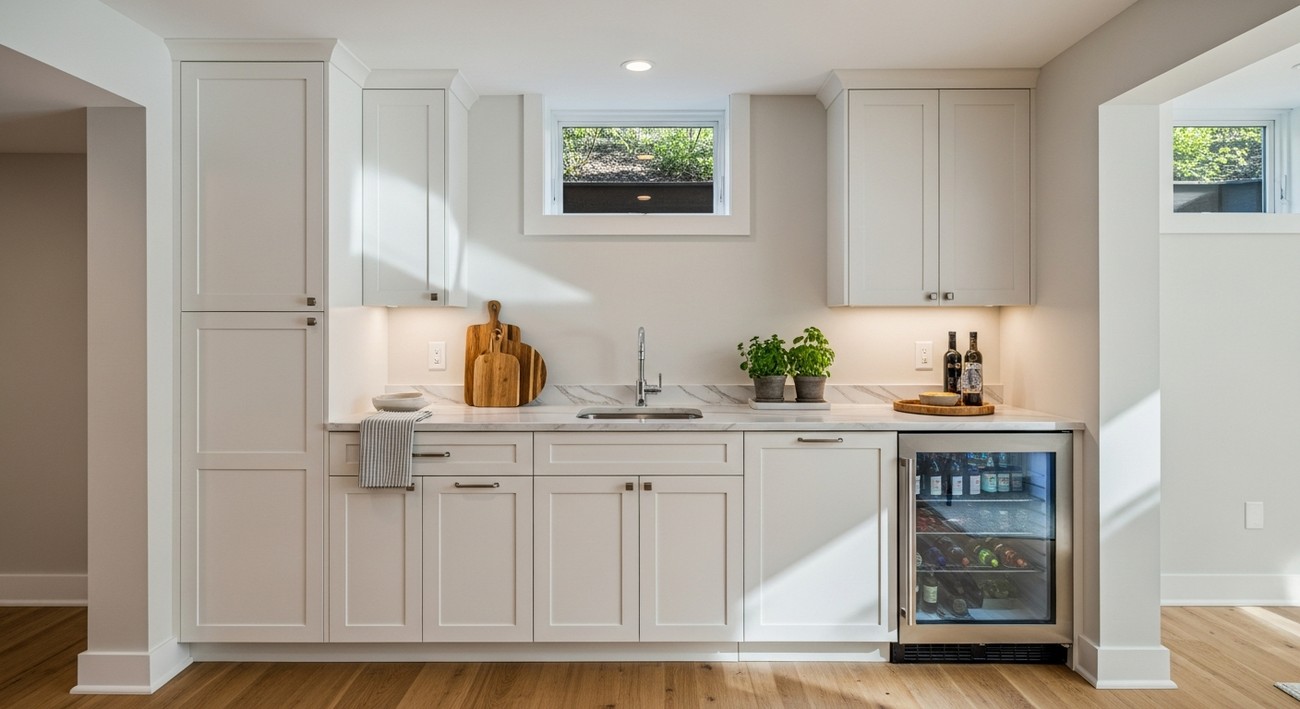
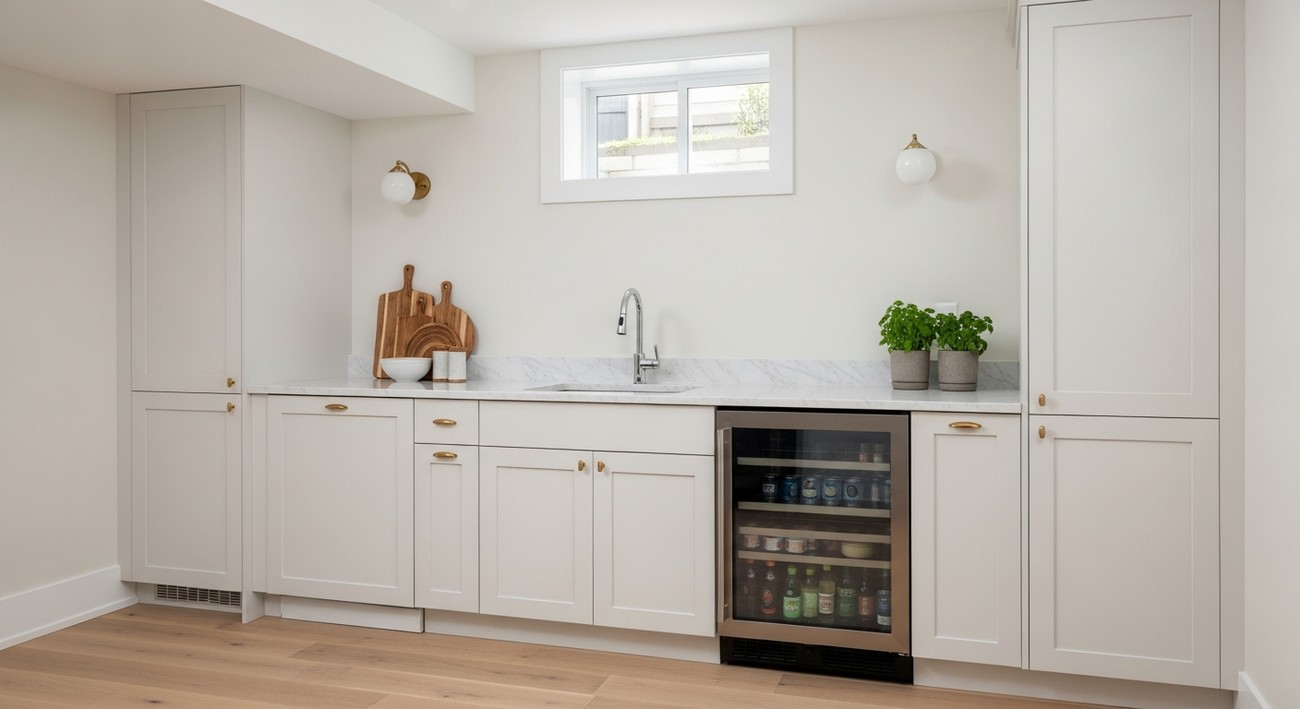
- Under-counter refrigerators
- Convection microwave ovens
- Compact dishwashers
Fixture Selection
Choose sleek, space-saving fixtures such as telescopic faucets and integrated sinks that blend function with design.
Style and Decor: Bringing Your Vision to Life
Express your personal style in your basement kitchenette's decor. Here are some tips to create an inviting atmosphere:
Color Scheme
Basements tend to be dimmer, so opt for lighter hues to create an illusion of space:
- Neutral tones like beige or light gray.
- Accent colors with bright or warm shades for a splash of personality.
Materials and Finishes
Durability is key, especially in a basement setting. Consider using:
- Quartz or granite for countertops that resist stains and damages.
- Ceramic tiles for easy-to-clean, stylish flooring options.
Smart Storage Solutions
Efficient storage is the backbone of a functional kitchenette:
- Pull-out pantries make the most of narrow spaces.
- Corner carousels effectively use difficult-to-access corner cabinets.
- Floating shelves for open storage that doubles up as display space.
Transforming Your Basement Kitchenette into a Social Hub
With the right layout and decor, your basement kitchenette can become a central hub for social activities.
Setting Up a Bar Area
If you entertain frequently, consider installing a bar area stocked with beverages. Equip it with necessary glassware and tools for cocktails and beverages.
Incorporating Seating
Choose seating options that fit the space and style. Bar stools can be a great choice for counters, while a small table with chairs offers a more formal dining experience.
Frequently Asked Questions About Basement Kitchenettes
How do I plan a basement kitchenette design?
Designing a basement kitchenette involves several key considerations. First, assess the available space and decide on the layout that will best suit your needs. Common layouts include galley, L-shaped, and U-shaped, based on the space constraints. Focus on maximizing the available area by including compact yet functional appliances like a mini-fridge or a small oven. You'll also want to think about plumbing and electrical needs early on in the process, as these may require professional installation. Don’t forget to consider storage solutions and material selections that can handle the sometimes-damp conditions of a basement environment.
What is the average cost to install a kitchenette in a basement?
The cost of installing a basement kitchenette can vary widely depending on the size, materials, and appliances you choose. On average, you might expect to spend anywhere from $5,000 to $20,000. Smaller basement bar setups can start at the lower end, while full-scale kitchenettes with high-end finishes can quickly drive up the price. Be sure to factor in labor costs for plumbing, electrical work, and cabinetry installation, as these can significantly impact the final budget. It helps to get multiple quotes from contractors to find the best deal for your budget.
What appliances are suitable for a basement kitchenette?
A basement kitchenette typically includes smaller, space-efficient versions of main kitchen appliances. Consider installing a compact refrigerator, a microwave, and possibly a two-burner stovetop. Many homeowners also include a dishwasher drawer or a combination washer-dryer if laundry is a consideration. Depending on your needs, you might add specialty appliances like a wine cooler or a toaster oven. Ensure that all appliances are energy-efficient to help minimize utility costs over time.
How can I ensure proper ventilation in my basement kitchenette?
Ventilation is crucial in a basement kitchenette to prevent moisture build-up and maintain good air quality. Install range hoods above your cooking appliances to capture smoke, steam, and odors. If your layout permits, consider installing ductwork for exterior ventilation, but there are ductless options as well. Dehumidifiers can be useful for managing basement humidity levels, especially in older homes where this is a common issue. Proper insulation and the use of exhaust fans can further enhance air circulation throughout the basement area.
What are some popular styles for a basement kitchenette?
When it comes to stylistic choices for a basement kitchenette, the possibilities are virtually endless. Contemporary styles featuring sleek lines and minimalistic designs are popular for their clean look and functionality. If you prefer something cozier, a farmhouse or rustic style can add warmth to the space with natural wood tones and vintage appliances. For a touch of luxury, consider a transitional style that blends modern conveniences with classic elements, like marble countertops or custom cabinetry. Tailor the style to complement the overall theme of your home while keeping durability in mind.
Can a basement kitchenette add value to my home?
Yes, adding a basement kitchenette can significantly increase your home's value, particularly if it is designed with quality materials and craftsmanship. It can make your home more attractive to potential buyers by providing additional living space and functionality. A well-executed basement kitchenette can often be the deciding factor for buyers interested in in-law suites or rental income opportunities. Even if not selling, it offers the benefit of multipurpose use for entertaining, guest accommodation, or personal enjoyment, thus enhancing your overall quality of life.
Is it necessary to obtain permits for building a basement kitchenette?
In most cases, you will need to obtain building permits to construct a basement kitchenette, especially if the work involves adding plumbing, electrical lines, or making structural changes to your home. The specific requirements can vary by location, so it is crucial to consult with your local building authority. Failing to acquire the necessary permits can result in fines, legal headaches, and complications when selling your home in the future. Hiring a licensed contractor knowledgeable about local building codes can ensure that your basement kitchenette project complies with all regulations.
How can I incorporate storage solutions in my basement kitchenette?
Allocating sufficient storage space in your basement kitchenette is essential for maintaining an organized and efficient space. Consider installing upper and lower cabinets to utilize vertical space fully; open shelving can add style and provide easy access to frequently used items. Incorporate pull-out drawers and lazy Susans for utilizing corner spaces effectively. If space allows, a kitchen island or a built-in pantry can offer additional storage options. Use adjustable shelving systems to maximize flexibility, and don’t overlook the potential for storing items in creative spaces like under benches or in folding tables.
Step-by-Step Guide
Tools/Materials Needed
- Tape Measure
- Level
- Carpenter’s Pencil
- Utility Knife
- Screwdriver Set
- Drill and Drill Bits
- Stud Finder
- Circular Saw
- Hammer
- Pipe Wrench
- Adjustable Wrench
- Plumber’s Tape
- Electrical Tester
- Pliers
- Safety Glasses
- Work Gloves
Materials
- Cabinetry
- Countertop
- Sink and Faucet
- Mini Refrigerator
- Microwave/Oven
- Backsplash Tiles and Adhesive
- Tile Grout
- Plumbing Pipes/Fittings
- Electrical Wiring
- Lighting Fixtures
- Wall Paint or Wallpaper
- Flooring Material
Preparation Steps
Plan Your Space: Measure your available basement area. Sketch a layout to visualize cabinet placement, appliances, and plumbing fixtures.
Check Local Codes: Ensure all plans comply with local building regulations. Secure necessary permits for electrical and plumbing work.
Budget Wisely: Outline your budget and price out materials. Leave a contingency fund for unexpected costs.
Detailed Instructions
1. Clear the Area
- Remove existing materials, furniture, and obstructions. Ensure the area is clean and accessible.
2. Install Plumbing
- Locate Water Lines: Use the pipe wrench to tap into existing lines. Install a shut-off valve for safety.
- Run Pipes: Connect piping to your sink location, making secure joints with plumber’s tape.
- Test Water Flow: Turn on your new shut-off valve and check for leaks.
3. Electrical Setup
- Identify Circuits: Use the electrical tester to locate existing circuits to power appliances.
- Install New Outlets: If necessary, drill holes and run wiring to desired outlet locations.
- Mount Lighting: Install overhead niche lighting, ensuring it aligns with your seating or food prep area.
4. Frame and Paint
- Frame Walls (if needed): Use the stud finder to locate studs and mount additional framework for walls or cabinets.
- Paint/Wallpaper: Choose a color or design scheme and apply it using rollers for a smooth finish.
5. Install Cabinets and Counters
- Mount Cabinets: Secure cabinets to wall studs using a screwdriver or drill.
- Attach Countertops: Measure and cut to size with a circular saw. Secure to cabinets.
6. Sink and Faucet Installation
- Cut Countertop Opening: Fit the sink and apply a bead of silicone around the edge.
- Install Faucet: Follow manufacturer’s instructions and connect water lines using an adjustable wrench.
- Test for Leaks: Run water to ensure all connections hold.
7. Appliance Installation
- Place Refrigerator: Level the fridge, adjusting legs as needed.
- Install Microwave/Oven: Secure according to the manual.
8. Backsplash and Flooring
- Lay Backsplash Tiles: Apply adhesive and set tiles in place, trimming edges with a utility knife. Once dry, use grout to fill in gaps.
- Install Flooring: Cut and lay flooring material. Ensure it matches the water-resistant requirements.
Tips for Success
- Measure Twice: Avoid mistakes by double-checking your measurements before cutting any material.
- Stay Organized: Keep tools and materials within reach to streamline your process.
- Prioritize Safety: Wear safety glasses and work gloves during installation.
What to Do if Something Goes Wrong
- Plumbing Leaks: Rethread connections with additional plumber’s tape. Check for proper pipe alignment.
- Electrical Issues: Double-check wiring and connections. Consult an electrician if problems persist.
- Cabinet Misalignment: Use shims to correct any leveling issues. Re-drill holes if necessary.
- Tile Cracking: Replace damaged tiles immediately. Use spacers to prevent future issues.
Common Mistakes to Avoid
1. Inadequate Ventilation
This mistake often slips through the cracks because basements are notoriously enclosed spaces. Lack of proper ventilation can lead to moisture buildup, odors, and even mold growth.
Why This Happens: Often, the focus is mainly on aesthetics and functionality, sidelining the importance of air circulation.
How to Avoid It: Incorporate ventilation solutions, like range hoods or exhaust fans, right from the start. Ensure there's at least one window to facilitate airflow, if possible.
What to Do If You've Already Made the Mistake: Consider installing a dehumidifier or retrofit an exhaust system to increase air circulation. Consult with an HVAC specialist to evaluate the best options for your space.
Expert Recommendations: Ventilation is key. Jeffrey Barnett, a home improvement specialist, suggests prioritizing ventilation in small spaces to maintain air quality and prevent long-term damage.
2. Poor Lighting
Basements can easily become dim and uninviting without proper lighting, greatly diminishing the kitchenette's appeal and functionality.
Why This Happens: Natural lighting is limited, and artificial lighting can be an afterthought, leading to subpar illumination.
How to Avoid It: Implement a layered lighting strategy: ambient lighting for overall illumination, task lighting for food prep areas, and accent lighting for aesthetic touches.
What to Do If You've Already Made the Mistake: Upgrade to brighter, energy-efficient LED lights and add fixtures specifically in shadowy areas.
Expert Recommendations: Lighting designer Lisa Franklin recommends using dimmers to adjust light levels according to different needs and moods, enhancing both functionality and atmosphere.
3. Ignoring Building Codes and Permits
Skipping the legal stuff may seem tempting but can result in costly fines and safety hazards.
Why This Happens: Eagerness to start the project or misinformation can lead some to bypass local regulations.
How to Avoid It: Research and comply with all local building codes and acquire necessary permits before any renovation begins.
What to Do If You've Already Made the Mistake: Retroactively apply for permits and have a professional inspection to ensure compliance with local codes.
Expert Recommendations: Real estate advisor Carla Mitchell emphasizes safeguarding your investment by meticulously adhering to local ordinances, which can also enhance the home's resale value.
4. Overlooking Adequate Storage
A well-designed kitchenette succumbs to chaos without sufficient storage solutions.
Why This Happens: The desire for sleek designs and open spaces can overshadow practical storage needs.
How to Avoid It: Plan for ample cabinetry or open shelving during the design phase, adjusted for your cooking habits and utensils.
What to Do If You've Already Made the Mistake: Add modular storage options and utilize wall-mounted racks to maximize vertical space.
Expert Recommendations: Professional organizer Susan King advises multipurpose furniture—like storage benches or islands with built-in cabinets—to enhance storage without compromising space.
5. Mismatched Appliances
Efficiency goes out the window when appliances don't suit both your needs and the space.
Why This Happens: Visually appealing but ill-suited appliances may be chosen without considering the basement's spatial constraints or functionality.
How to Avoid It: Focus on space-saving and versatile appliances. Make selections based on actual usage patterns and the electrical capacity of your basement.
What to Do If You've Already Made the Mistake: Consider swapping larger or unused appliances for compact, multipurpose alternatives.
Expert Recommendations: Appliance expert Jacob Troy recommends integrating built-in appliances for a seamless look that conserves space while meeting functional needs.
6. Overlooking Plumbing Requirements
Faulty or insufficient plumbing can lead to leaks and water pressure issues, obstructing the kitchen's day-to-day use.
Why This Happens: There's an assumption that basement plumbing setup mimics the main floor, which isn't always the case.
How to Avoid It: Prioritize a thorough evaluation of plumbing needs, including adequate drainage and water pressure capabilities, with a professional.
What to Do If You've Already Made the Mistake: Contact a plumber to assess and rectify any issues as soon as possible to avoid further complications.
Expert Recommendations: Plumber Linda Shores advises future-proofing your plumbing by considering potential appliance upgrades or additions during the initial setup.
Final Thoughts
A well-designed basement kitchenette can transform your unused space into a functional area for cooking, entertaining, or simply enjoying a cozy meal with family. By incorporating thoughtful design elements and practical features, you can create a stylish extension of your living space that adds both value and convenience to your home.
If you're in Springfield, MO, and thinking about making this upgrade, we at GoodLife Home Renovations are here to help turn your vision into reality. Whether you want to explore design ideas or need assistance with the installation, our team of trusted experts is just a call away. Let's work together to create a basement kitchenette that's perfect for your lifestyle!


